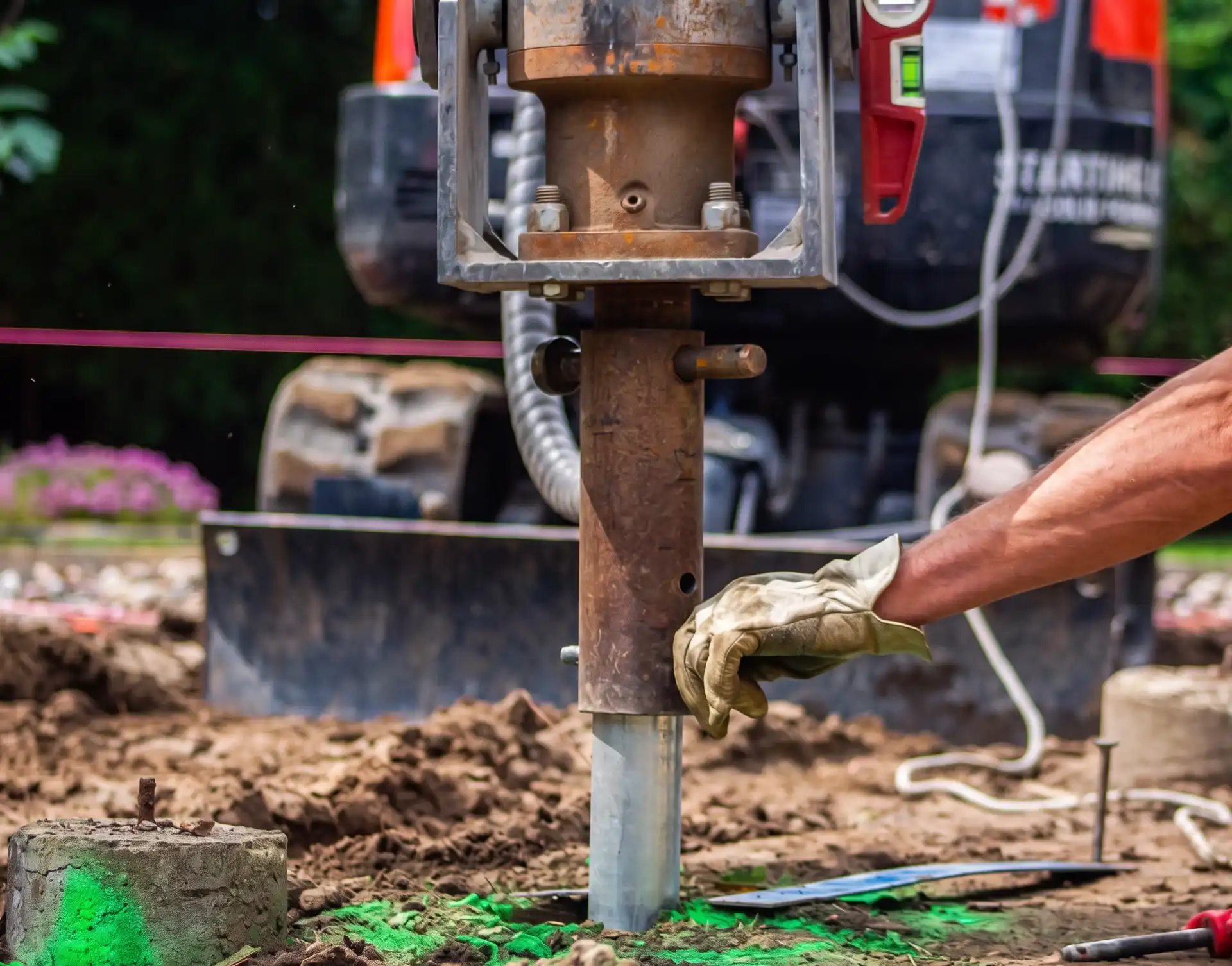
What Are Helical Piles and How Do They Work?
Helical piles, also called screw piles, are engineered steel foundation systems designed to transfer structural loads into suitable bearing soil below weaker surface layers.
Each pile consists of a steel shaft with one or more helical plates that are mechanically rotated into the ground using specialized equipment until the required installation criteria are achieved.
For homeowners and contractors considering this foundation system locally, explore our screw pile foundation services for Hamilton-area projects.
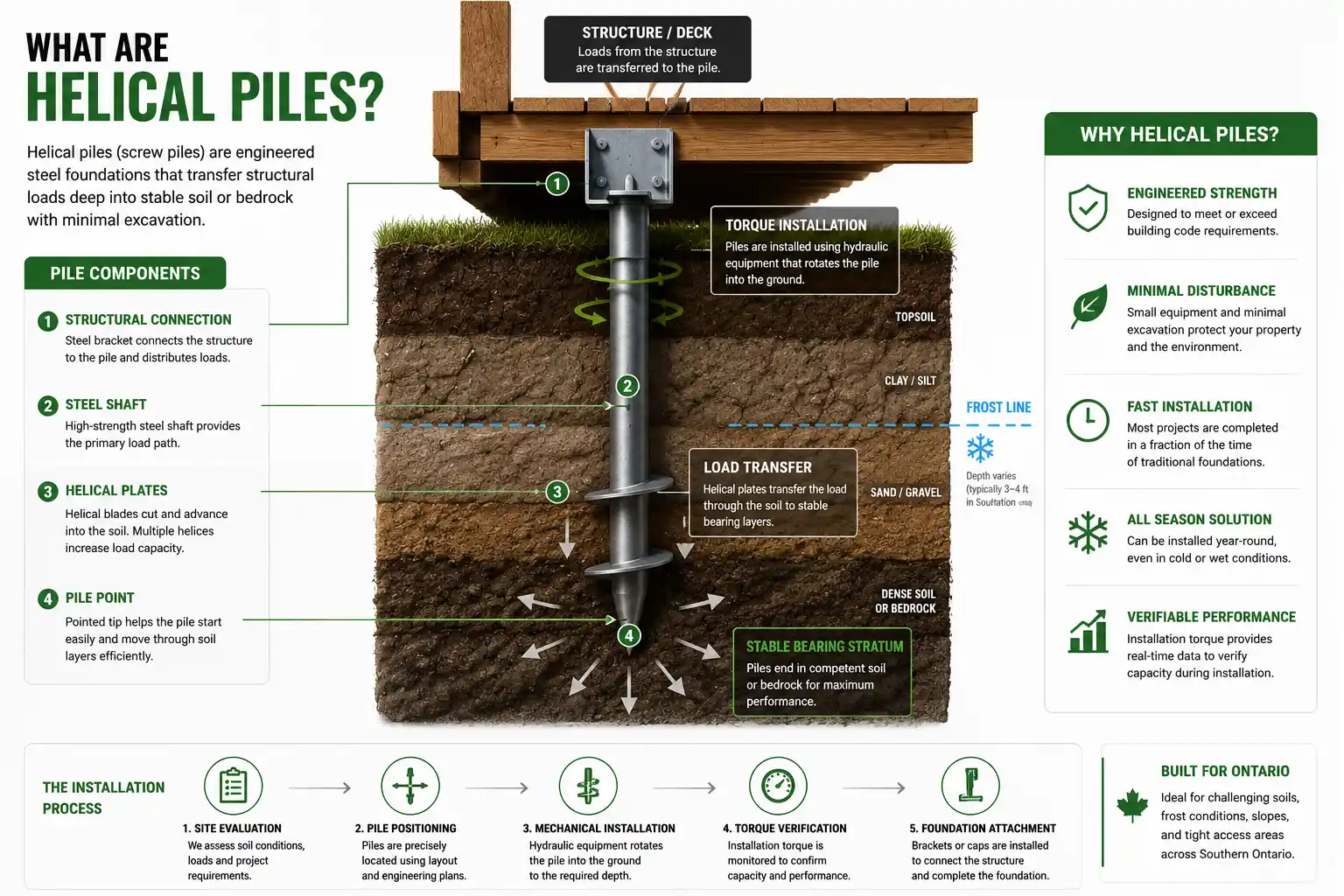
Steel Shaft
The central structural component that supports and transfers loads.
Helical Plates
Circular steel helices that allow the pile to screw into the ground.
Load Transfer
Structural loads transfer into suitable bearing soil below weaker surface layers.
How Helical Pile Installation Works in Hamilton
Site Evaluation
Ground conditions, access, structural loads, and project requirements are reviewed before installation begins.
Pile Positioning
Piles are positioned according to the structural layout and project requirements.
Mechanical Installation
Specialized hydraulic equipment rotates the pile into the ground with minimal excavation.
Torque Verification
Installation resistance is monitored as the pile advances toward the required bearing conditions.
Foundation Attachment
Brackets or structural connections are installed to support the finished structure.
Looking for installation locally? See our Hamilton screw pile and foundation services .
How Helical Piles Support Structural Loads
Helical piles transfer structural loads into deeper bearing soils below weaker or frost-affected surface material.
Installation depth, ground conditions, measured torque, structural loads, and pile design all contribute to the final foundation system.
Helical Piles for Hamilton & Ontario Soil Conditions
Hamilton-area projects can encounter clay, wetter ground, frost-affected surface soils, changing grades, and variable site access. Helical piles provide a flexible way to reach appropriate bearing conditions while limiting the amount of excavation required at the surface.
Clay Soil
Clay is common in parts of Southern Ontario and can be affected by moisture and seasonal movement.
Wet Areas
Helical piles can help reduce excavation challenges where wetter ground makes conventional footing work more disruptive.
Freeze-Thaw Conditions
Pile systems are designed to extend through frost-affected surface material toward suitable bearing conditions.
Sloped Properties
Screw piles can be useful for decks and structures on changing grades and uneven terrain.
Helical Pile Applications in Hamilton & Southern Ontario
Helical pile systems are used for residential, commercial, municipal, and infrastructure projects throughout Hamilton and Southern Ontario. See our complete helical pile applications guide for additional examples.
Planning a deck specifically? Visit our Hamilton deck footings and deck piles page for foundation-focused information.
Planning a solar array? See our solar ground mount foundations page for racking-ready screw piles.
Why Hamilton Builders & Homeowners Choose Helical Piles
Helical piles are often considered where project schedules, limited access, excavation, frost conditions, or existing landscaping make traditional concrete footings less practical. If you are comparing the two systems, read our helical piles vs. concrete guide .
Faster Installation
No concrete cure-time delay before the pile foundation can support the next stage of construction.
Minimal Excavation
Reduced disruption to landscaping and finished properties.
Year-Round Flexibility
Installation can continue through changing Southern Ontario construction seasons.
Engineered Stability
Pile selection and installation criteria can be matched to structural and ground requirements.
Screw Pile Services Across Hamilton Communities
Postech Hamilton serves projects across Hamilton and surrounding communities. Explore location-specific information for local foundation conditions, common project types, and screw pile applications.
Helical Pile FAQs for Hamilton & Ontario
How deep do helical piles go?
There is no single depth for every Hamilton-area property. Installation depth depends on the structure, ground conditions, pile design, and required installation criteria.
Can helical piles be installed in winter in Ontario?
Helical piles can be installed during Ontario winter conditions, depending on site access, project requirements, and conditions at the property.
How do helical piles handle Ontario frost conditions?
Helical pile systems extend through frost-affected surface material toward appropriate bearing conditions, helping reduce reliance on shallow footing soils affected by seasonal freeze-thaw cycles.
Are helical piles permanent foundations?
Helical piles can be designed as permanent structural foundation systems for residential, commercial, and other applications.